
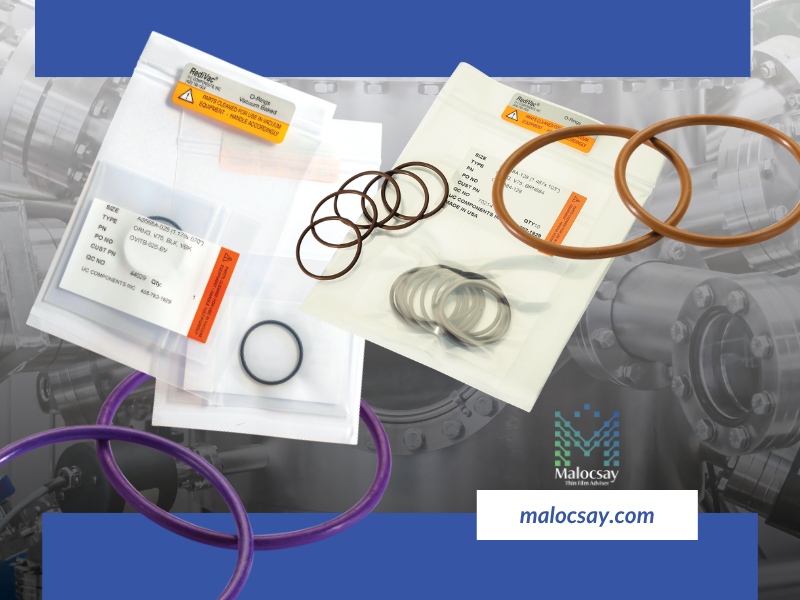
O-rings are used in just about every industry and typically to block the flow of liquids, gasses, or other materials. Their actual makeup and function is a bit unique, however. Why? In order to function properly the O-ring must deform.
Basically, O-rings are doughnut shaped parts that are installed in cavities known as glands and compressed into the cavity to form a seal. To ensure proper functionality the O-ring’s material, design, selection for the application, and installation must all be carefully controlled. If not, the O-ring (and potentially the entire piece of equipment it is installed in) could fail.
The most common causes of O-ring failure are:
- Incorrect size O-ring selected for the application
- Material and environmental incompatibility
- Improper design
- Improper installation
- And more
If an O-ring fails, the cause of that failure can be complex and difficult to evaluate. The most common types of O-ring failure that can occur include (but are not limited to):
- Abrasion
- Compression Set
- Damage During Installation
- Excessive Swelling
- Explosive Decompression
- Extrusion or Nibbling
- Heat Hardening or Oxidation
- Spiral Failure
- Weather or Ozone Cracking
- And more
| Failure Reason | What causes it | How to identify it |
| Abrasion | Poor lubrication, excessive temperatures, fluid contaminated with abrasive particles, and more. | A flattened surface on the O-ring indicates abrasion damage. |
| Compression Set | Excessive swelling, low heat resistance, squeezed too hard to achieve a seal, incomplete curing during manufacture, and more. | Flat surfaces on both sides of the O-ring’s cross section. |
| Damage During Installation | Sharp edges on mating components, sharp threads, oversized O-rings, O-ring twisted or pinched, improper lubrication, and more. | Short cuts or notches on the O-ring or skinning/peeling surface. |
| Excessive Swelling | The O-ring absorbed surrounding fluids and swelled due to incompatible material and environment. | A dramatic increase in the O-ring’s dimensions. |
| Explosive Decompression | Absorption of gasses at high pressures, or rapid decreases in pressure that causes the O-ring’s micropores to trap gasses. | Random short splits or ruptures deep in the O-ring’s cross section. Can also appear on the surface as small blisters. |
| Extrusion or Nibbling | Excessive system pressure, O-ring made of material that is too soft for the application, fluid degradation of the O-ring, irregular gaps, improper O-ring size, and more. | Small pieces or “nibbled bites” taken out of the O-ring. |
| Heat Hardening or Oxidation | Excessive temperatures applied to incorrect O-ring material for that application can cause hardening, evaporation of plasticizers, and cracking. | The O-ring surface appears pitted or cracked, often with flattened areas. |
| Spiral Failure | This is caused by simultaneous sliding and rolling of different segments of the O-ring. | The surface of the O-ring exhibits a series of deep, spiral, 45° angle cuts. |
| Weather or Ozone Cracking | O-rings made with improper materials that are exposed to ozone or other atmospheric pollutants. | Appears as small surface cracks perpendicular to the direction of the stress. |
Finding the right seal
Choosing the right O-ring is critical to ensure a proper seal. However, finding the right seal for your application can be challenging. Prior to selecting a seal, it is best that you consult an expert.
Reposted with permission from UC Components, Inc.